Strategy & Concept
Meza was developed from my own experience as an Asian American adoptee and the feeling of living between identities, cultures, and places without fully belonging to any one of them. Recognizing that others shared this feeling, I set out to design a symbolic place for people whose identities are layered or in-between. The name itself reflects that thinking. I was drawn to Mesa, meaning table, plateau, or common ground in Spanish, but did not want it anchored to any one cultural heritage. Changing the spelling to Meza created just enough distance, a word that feels familiar but belongs to no single place, much like the people it was designed for.
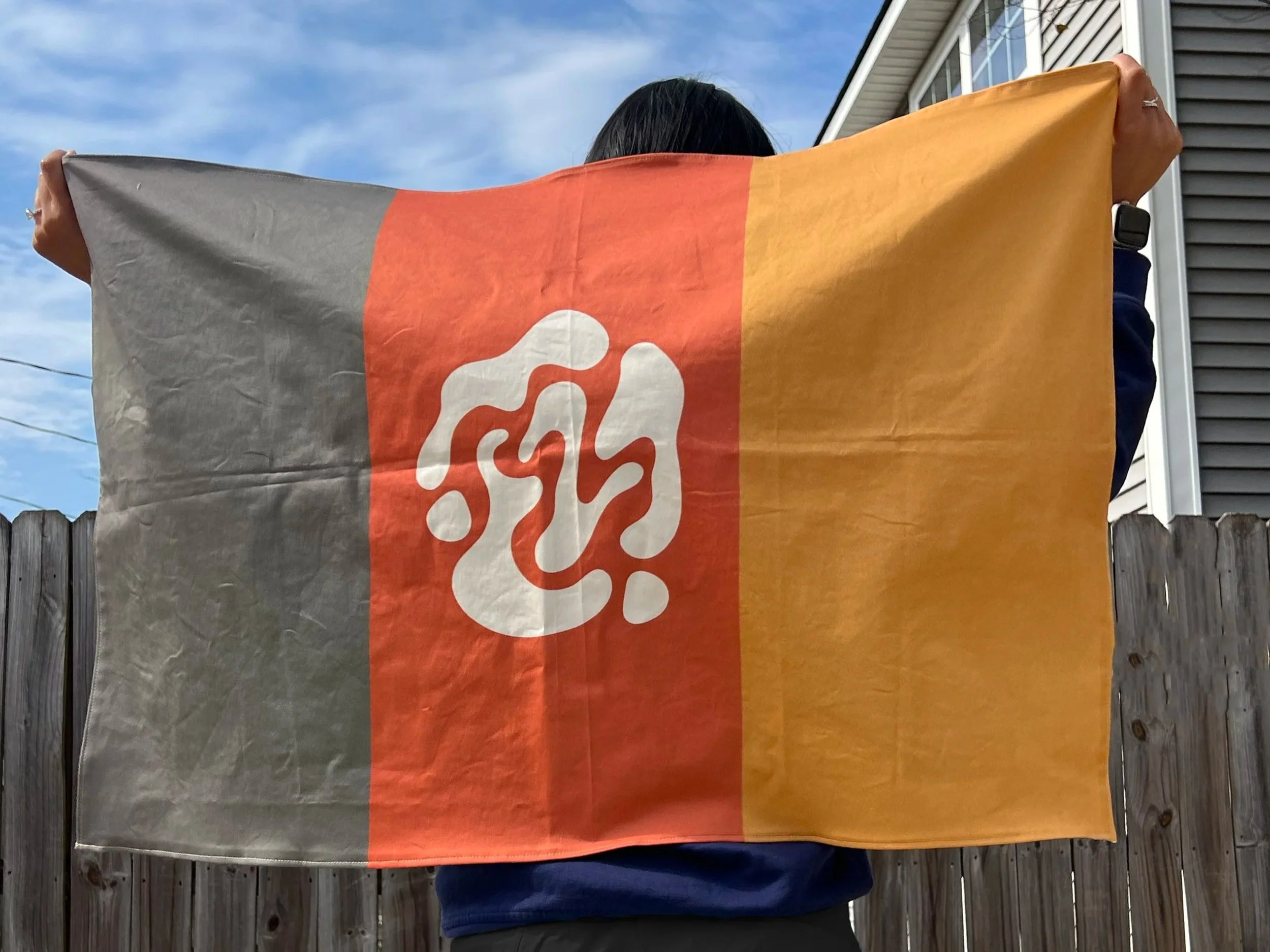
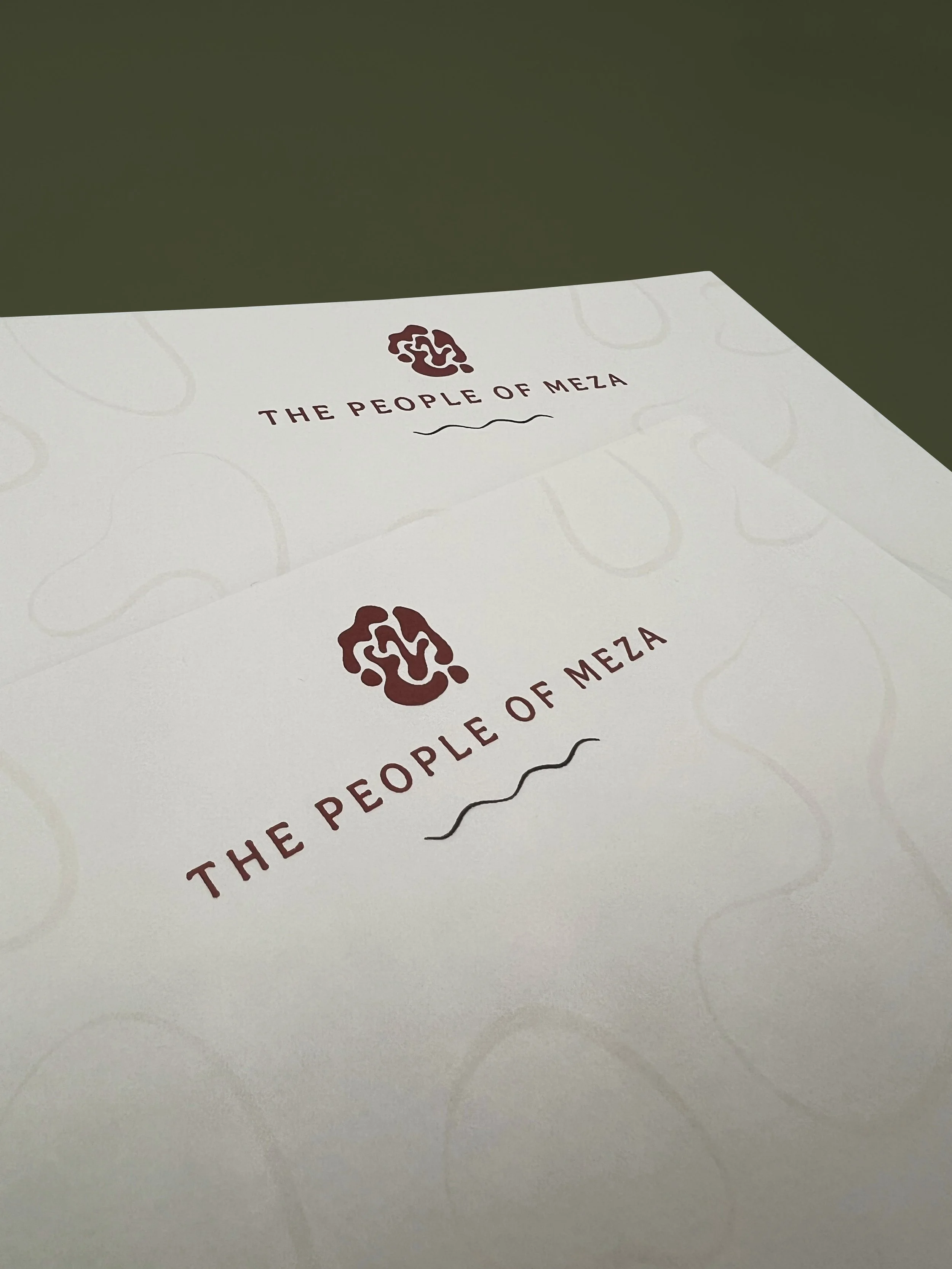
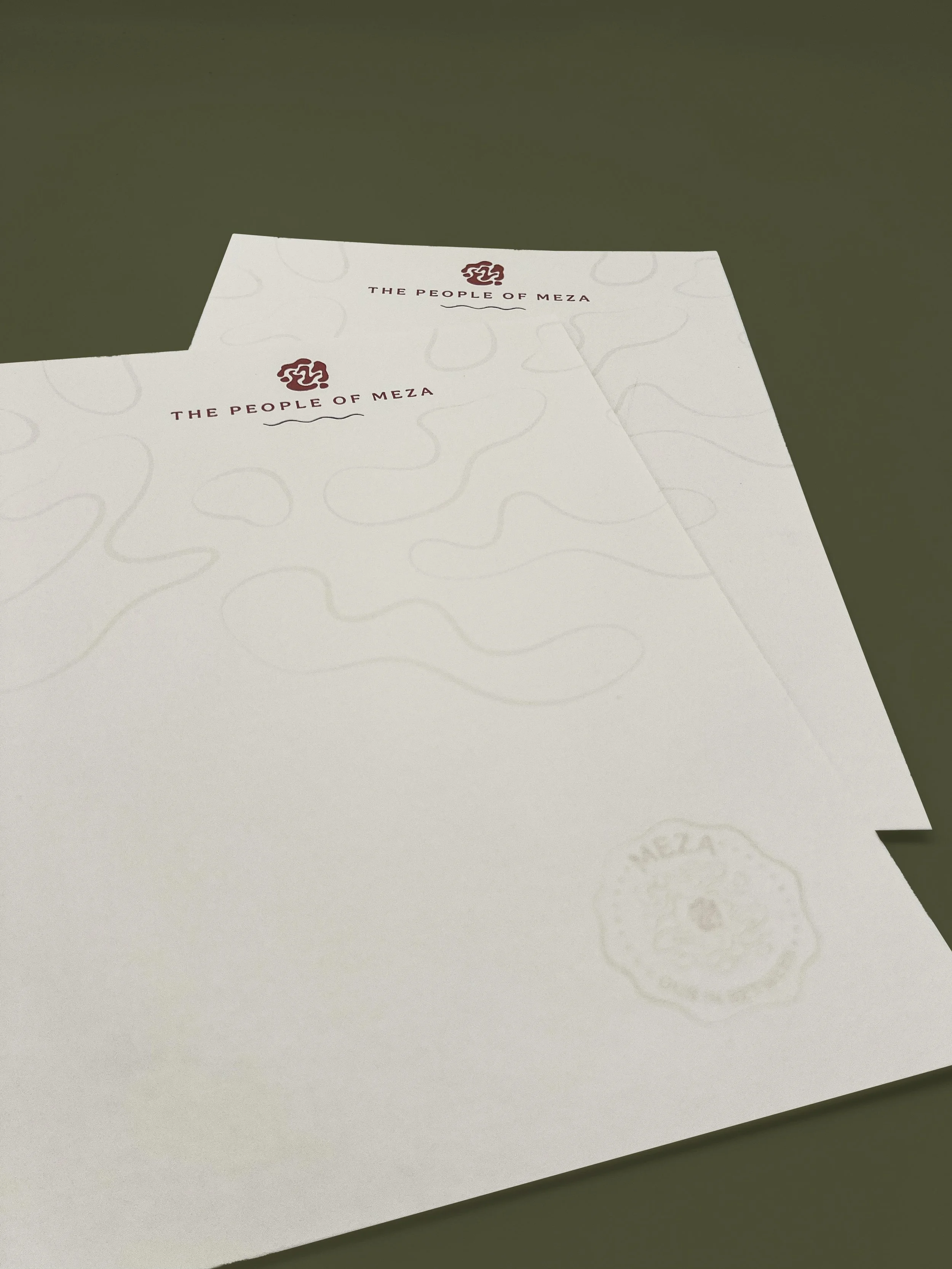
Instead of building a traditional brand, I looked to official nation symbols and documents as a visual language that signals legitimacy, recognition, and place. The project centers on a symbolic passport supported by a logo built from smaller forms joining into a unified whole, reflecting how multiple identities come together to form Meza itself. A flag, stationery, and a narrative book featuring interviewee stories extend the system, framing Meza as a place defined not by borders but by shared experience, and belonging as something you build rather than find.
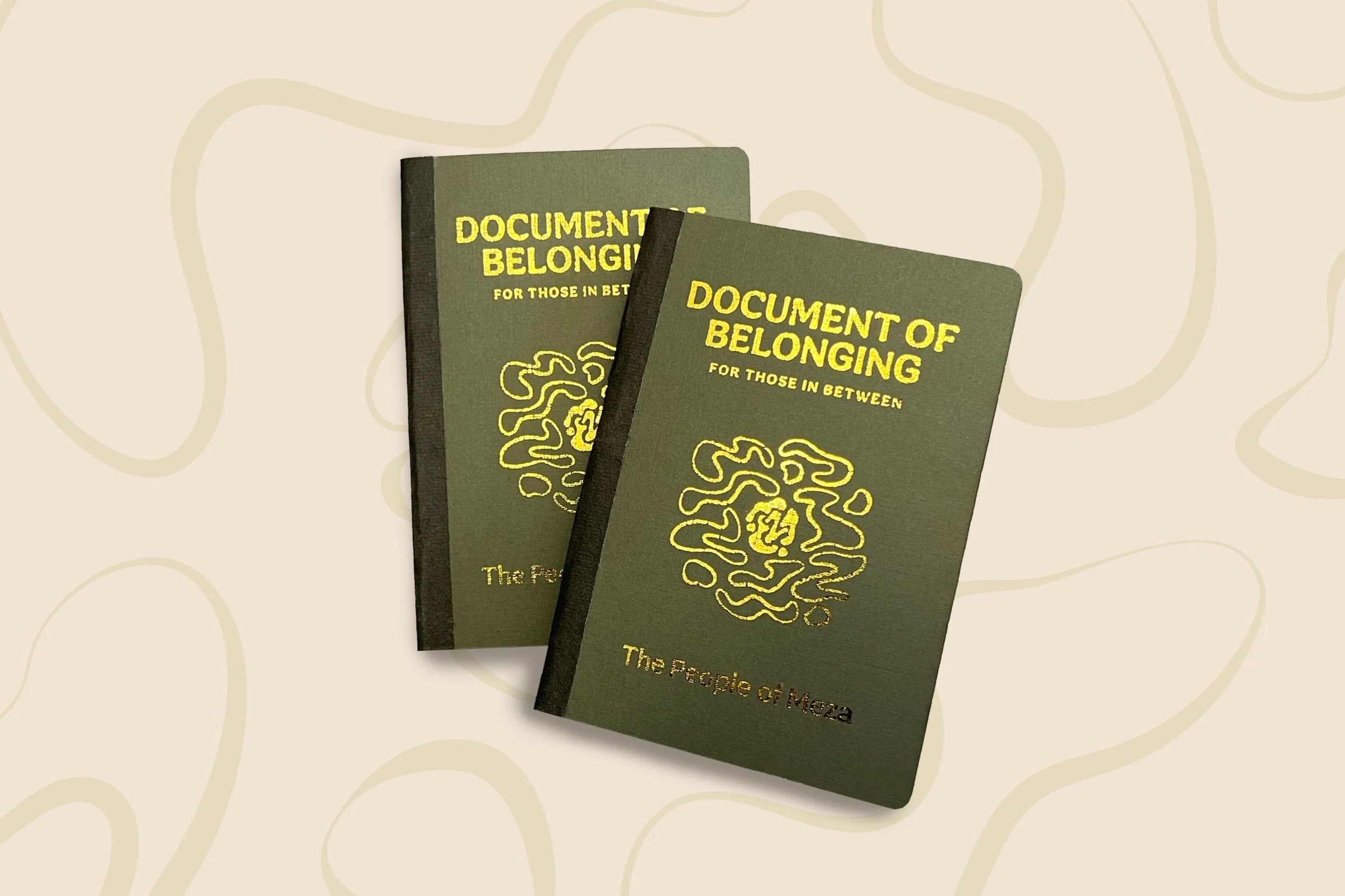
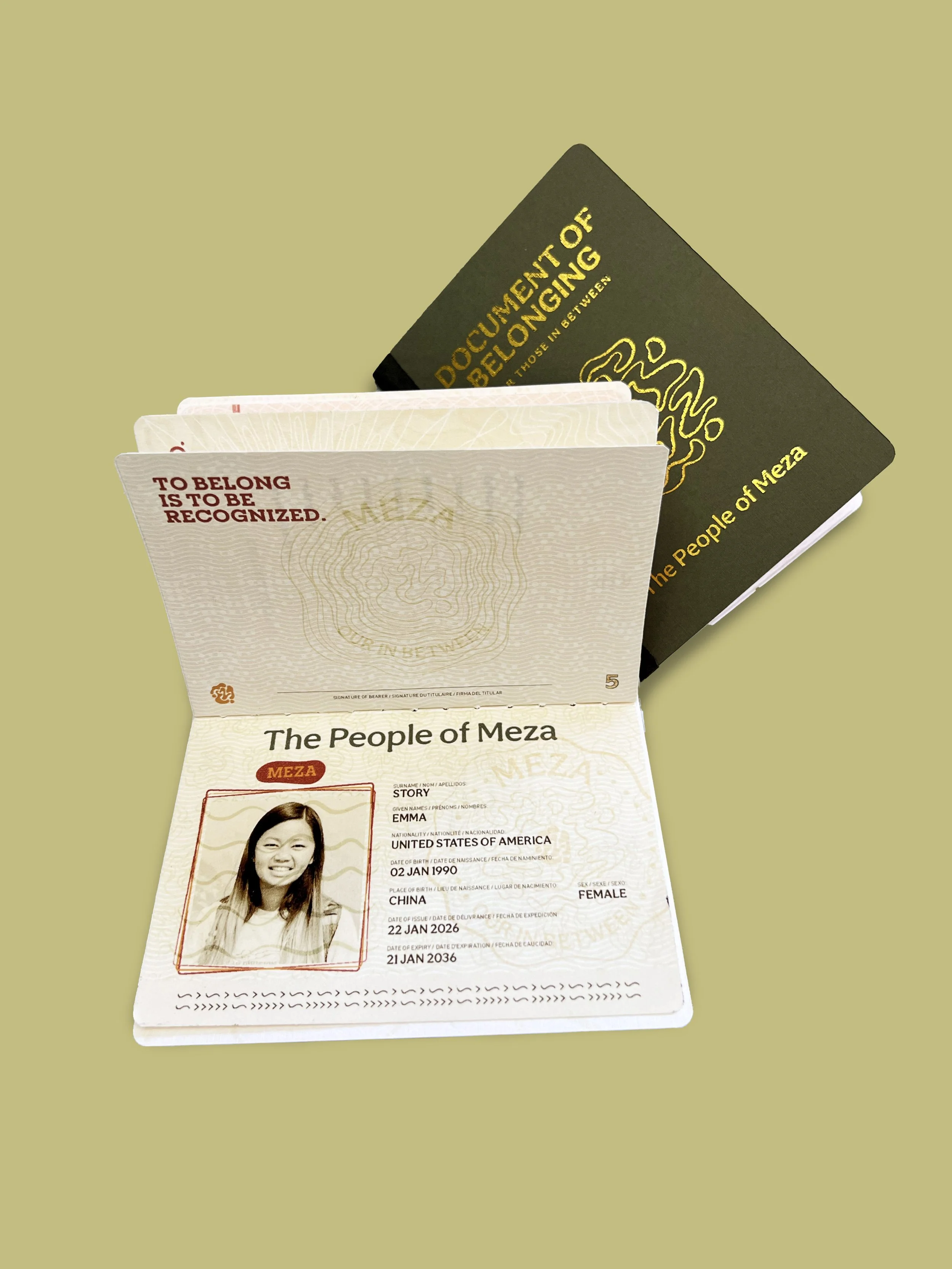
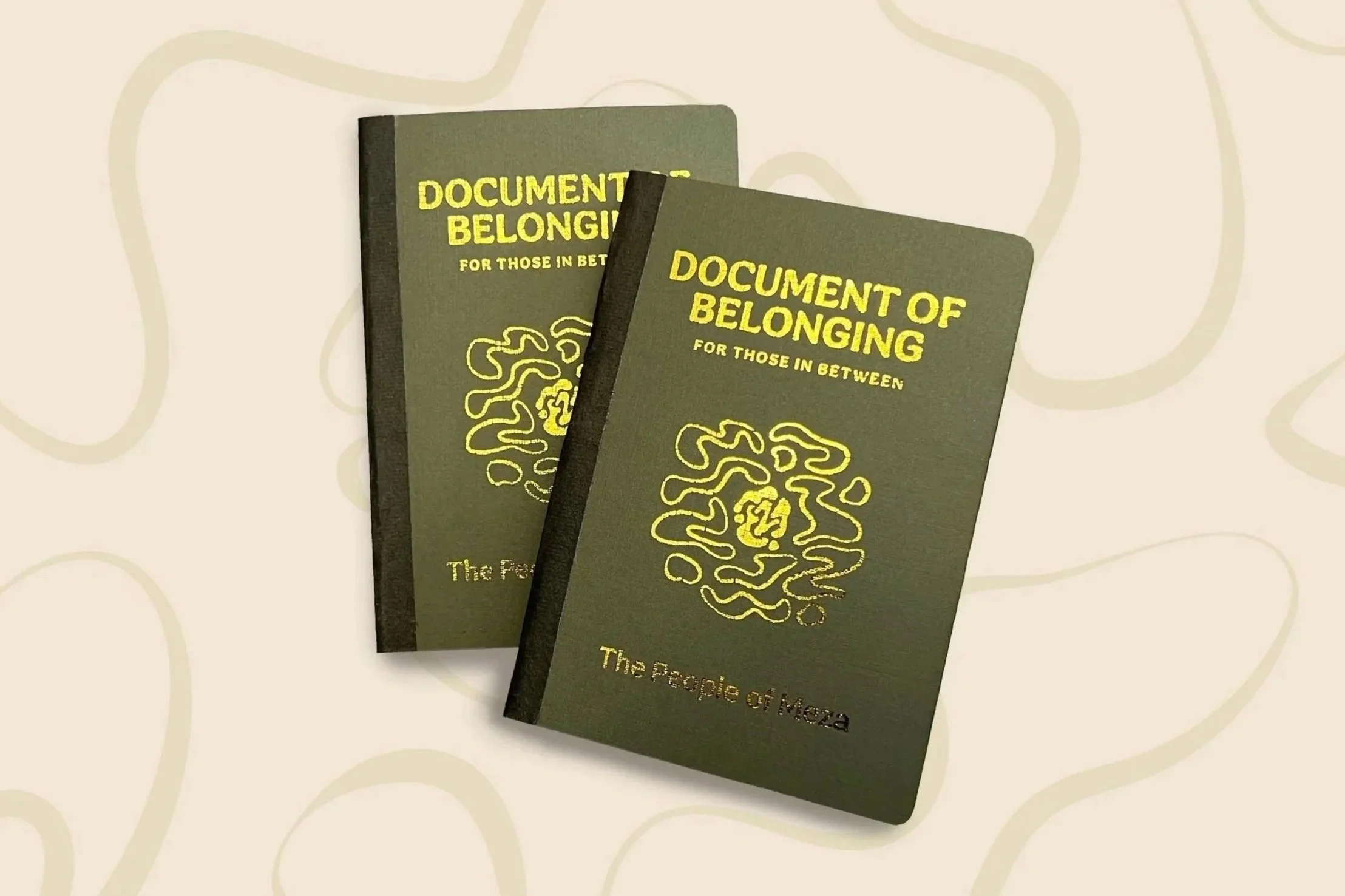
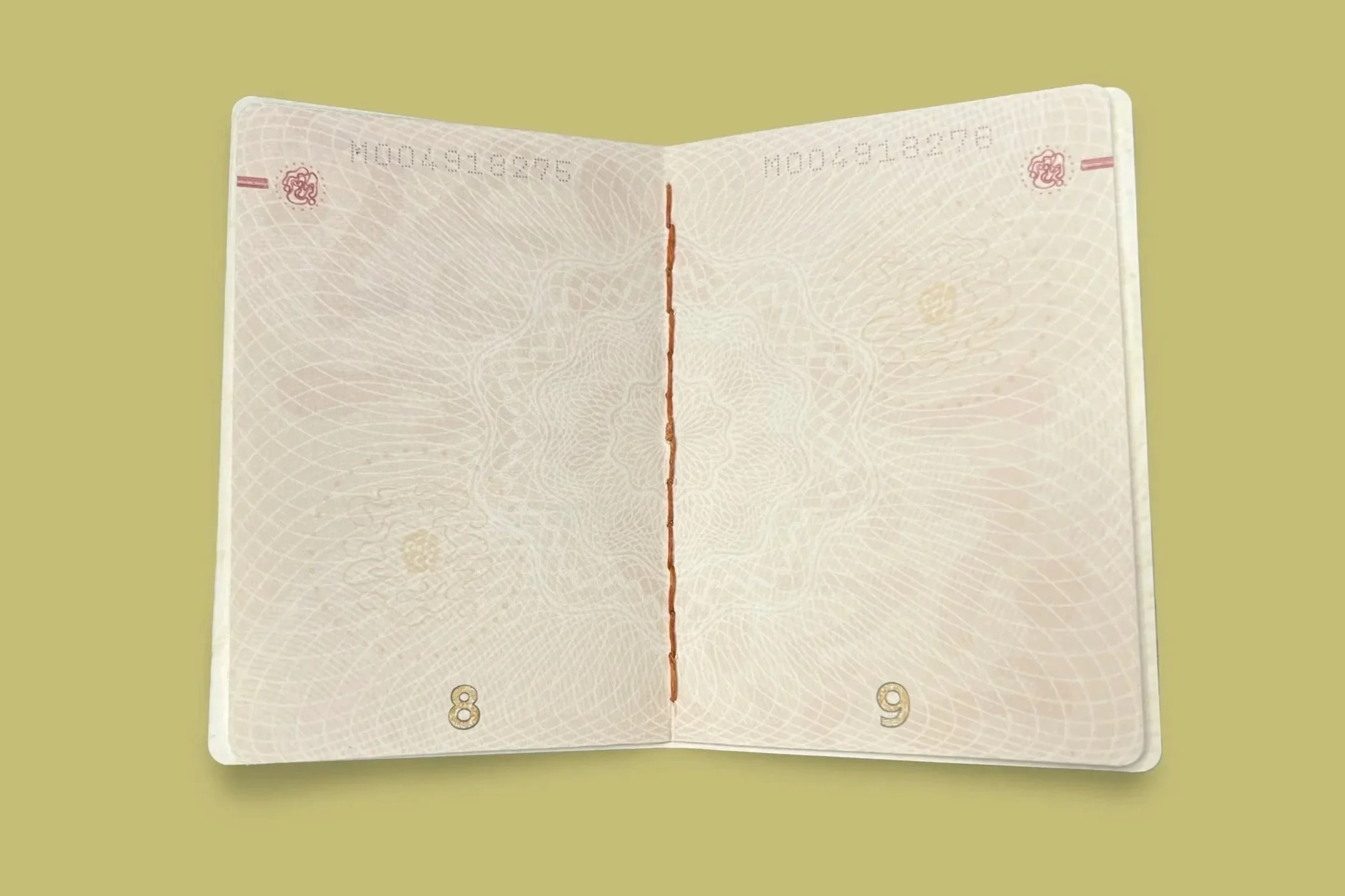
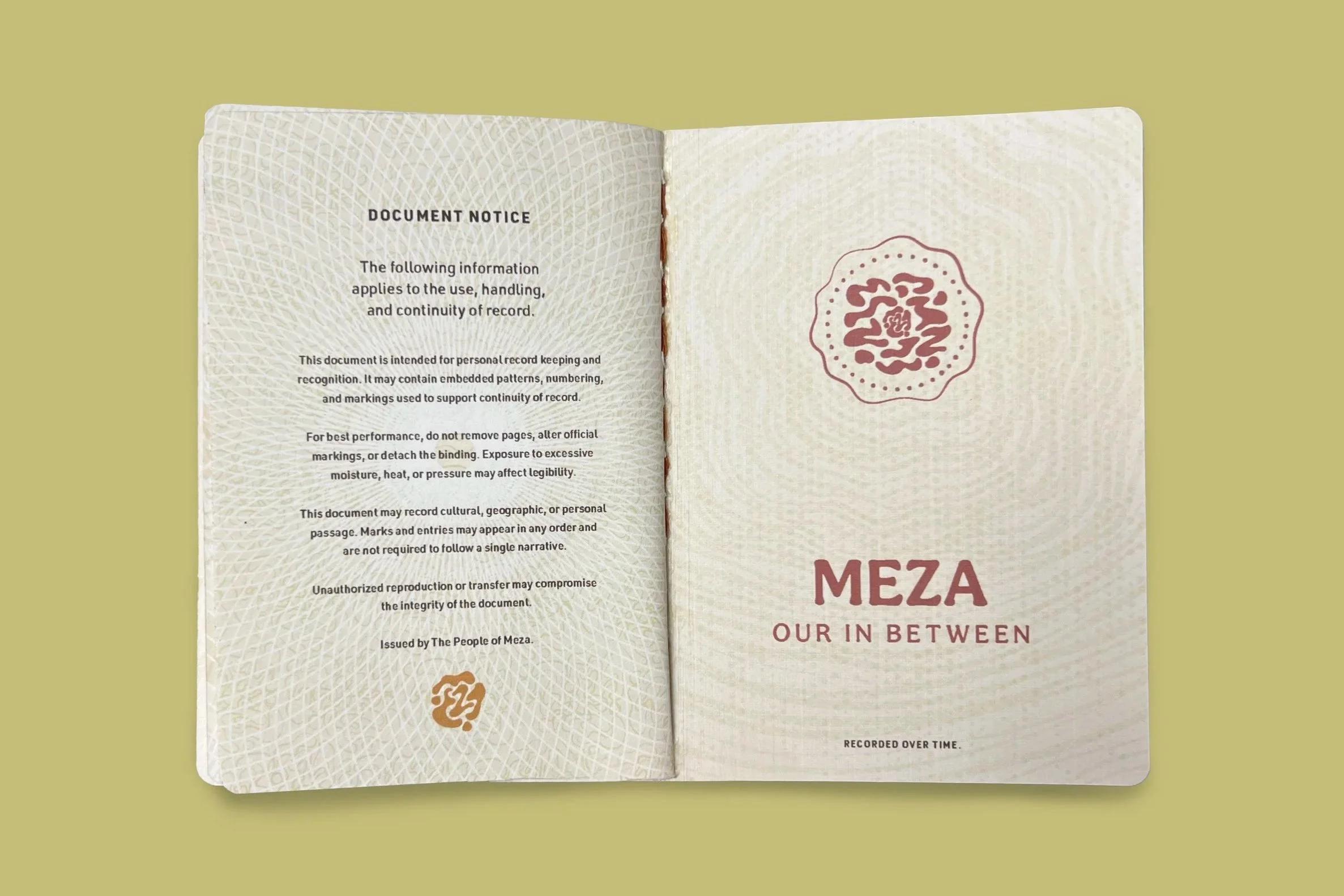
Document of Belonging
Using the structure of official passport documentation, this piece frames Meza as a place that recognizes identity and connection, using the document to acknowledge belonging rather than define it.
Flag
Serving as a unifying symbol, the flag represents collective identity and shared belonging through a form typically tied to nationhood and recognition.
Stationery
Extending the system into everyday communication, the stationery reinforces Meza as an organized, functioning place rather than a purely symbolic idea.
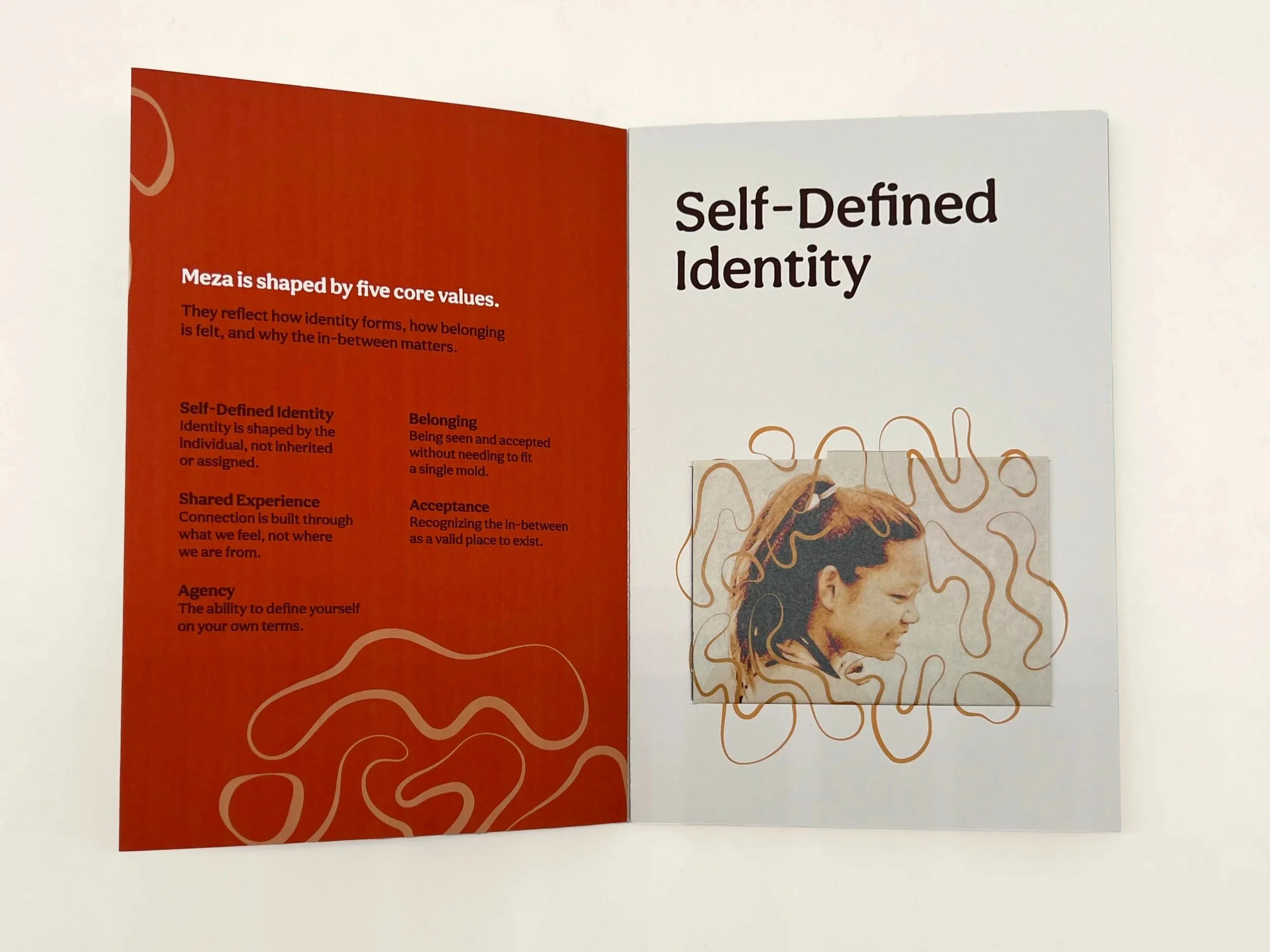
Narrative Book
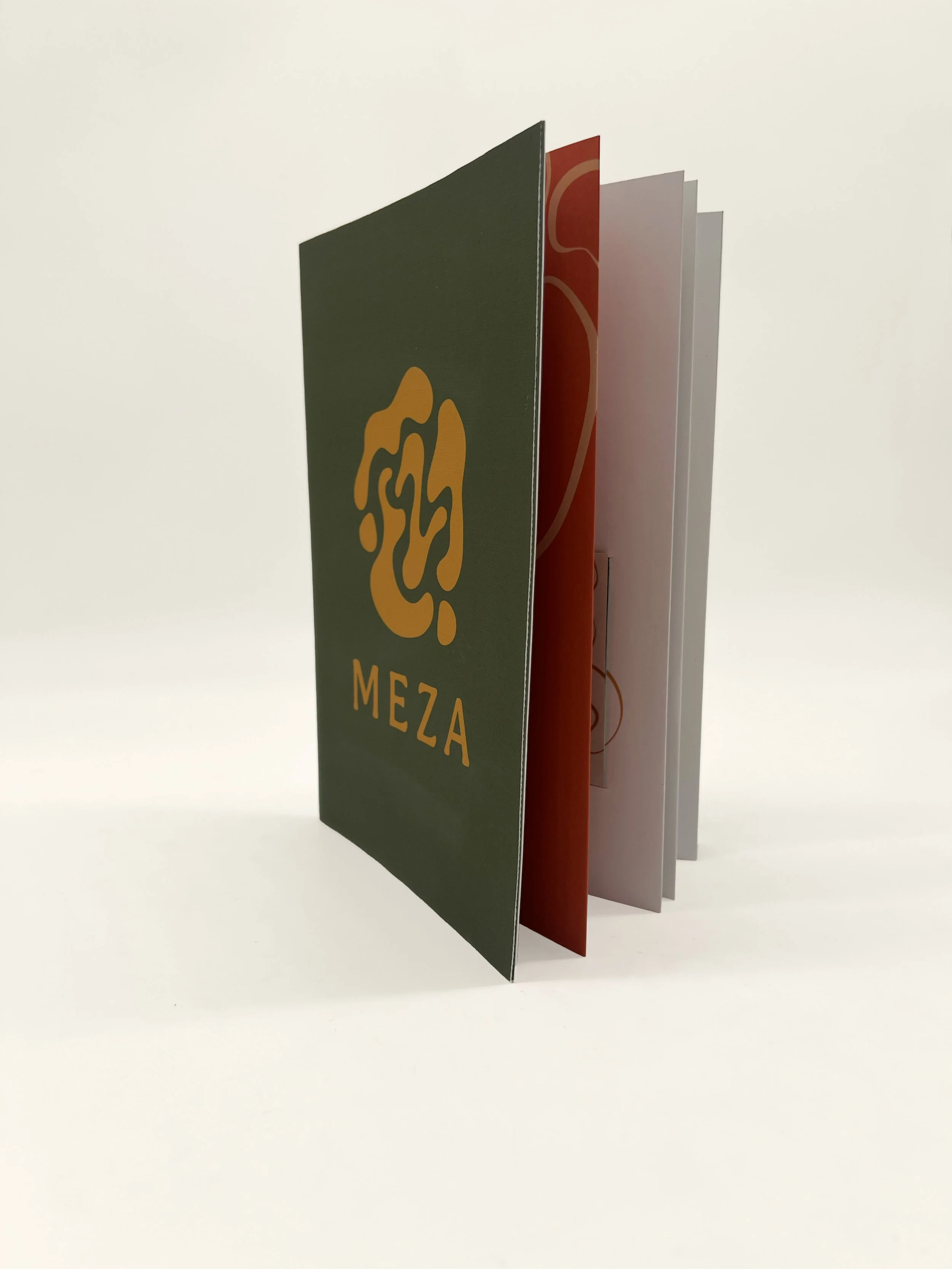
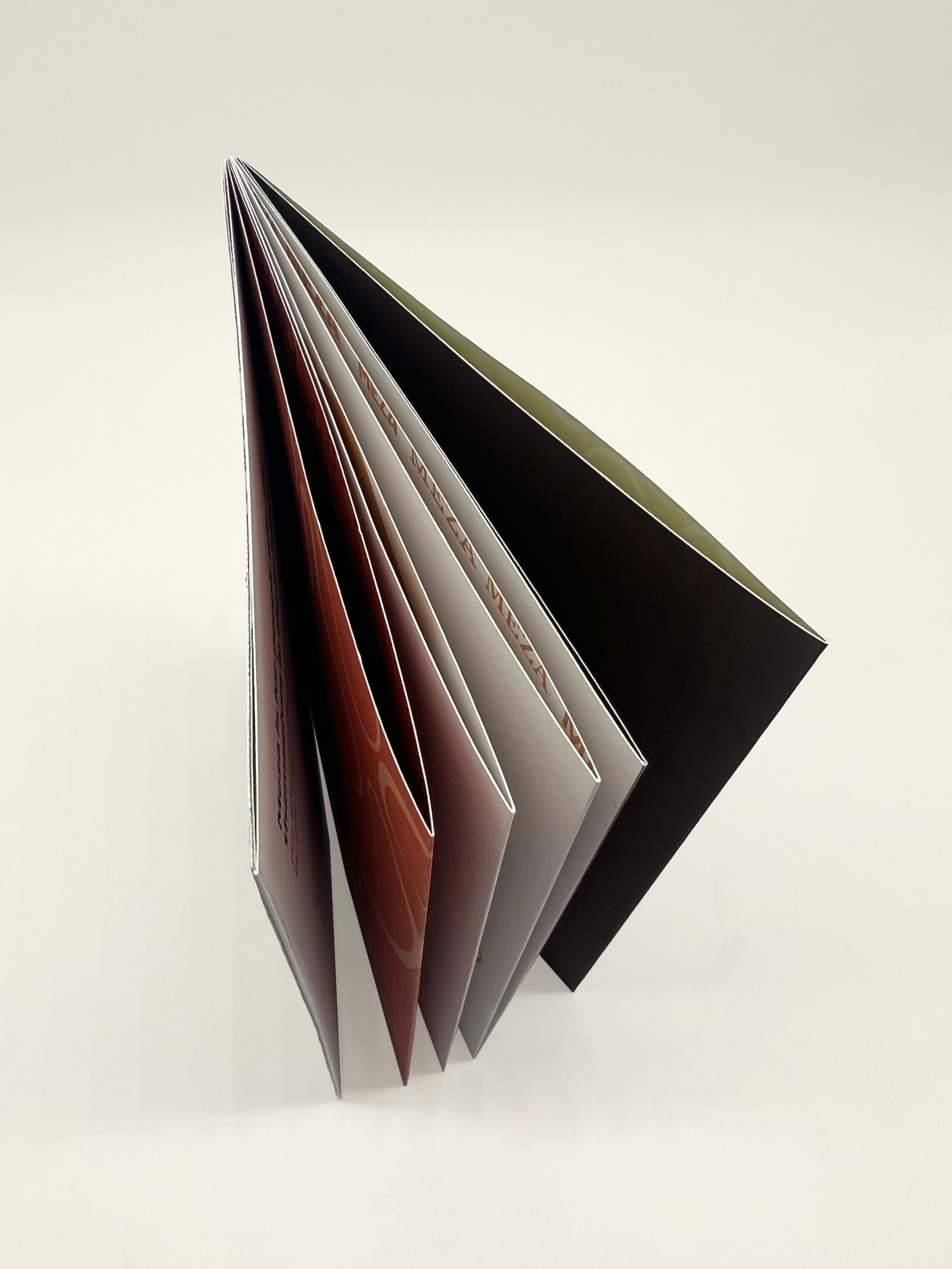
Grounded in lived experience, the book defines what Meza is and why it exists, outlining its values before introducing interviewee stories that give the project human depth and cultural context.